Evangelism and Leadership Training Endowment
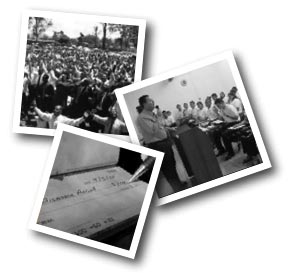
As Christians we are accustomed to giving regularly of our tithes and offerings. However many of us may not have realized that we can give gifts that will keep on giving long after we have gone to our eternal rewards.
The Foreign Missions Division and Stewardship Department of the United Pentecostal Church have joined efforts to raise funds for training and leadership. We have established the Training and Leadership Endowment under the United Pentecostal Foundation to provide financial resources. Jesus spent three and one half years training His disciples to continue the ministry of the church when He was gone. The Apostle Paul invested much of his time in training workers to continue missionary work.
The Training and Leadership Endowment will provide the additional funds needed to successfully training national leaders.
We can not overemphasize the importance to training national leaders. The future and success of our work overseas depends on effective training of leaders. While the Ladies Ministries of the United Pentecostal Church International and missionary accounts contribute to overseas training, there is always a need for additional funds. The Training and Leadership Endowment will provide the additional funds needed to successfully train national leaders.
You may place funds in the Training and Leadership Endowment in the following ways:
TYPES OF GIFTS USED TO FUND FOREIGN MISSIONS EVANGELISM AND TRAINING ENDOWMENT:
OUTRIGHT GIFT: Donation of cash and appreciated assets such as real estate, stocks, bonds, mutual funds, and collectibles can offer donors the opportunity to make a continuous gift to Foreign Missions, avoid capital gains taxes, and receive income tax deductions.
CHARITABLE GIFT ANNUITY: Provides for a high fixed income return guaranteed for life with special tax benefits. At the end of the annuity, the balance comes to Foreign Missions.
CHARITABLE REMAINDER TRUST: Allows donors to sell an asset within the trust, free of capital gains tax, and provides income to designated beneficiaries with additional tax benefits. At the end of the trust, the “remainder” goes to Foreign Missions.
CHARITABLE LEAD TRUST: Allows donors to sell an asset within the trust, free of capital gains tax, and provides income to Foreign Missions for a designated period of time before the balance comes back to the donors or their estate. This also has special tax benefits.
LEGACY GIFT: Memorial and honor gifts through cash and assets or planned gifts provide a thoughtful way to make gifts in honor of special loved ones and friends.
DONOR ADVISED FUNDS: Offers donors the opportunity to establish a perpetual fund for giving to their favorite ministries and allows the donors the flexibility to continually decide where their gifts should go, including Foreign Missions.
RETAINED LIFE ESTATE: Donors can donate their home or farm and retain life estate or usage for their lifetime. They receive income tax deductions now and avoid capital gains taxes. At the end of their lives, Foreign Missions sells the property and places the proceeds in the Evangelism and Leadership Endowment.
LIFE INSURANCE GIFT: Donors can name the Foreign Missions Evangelism and Leadership Training Endowment in the United Pentecostal Foundation as the beneficiary or beneficiary and owner of their policy. This can be a policy they presently own or a new policy they purchase as a gift. The donors might receive income tax deduction for the gift’s value, plus possible estate tax savings. The benefit is making a significant gift with little expense to the donor. Many times it is with insurance once needed for their family/estate that is no longer needed.
RETIREMENT PLAN GIFT: Donors can name the Foreign Missions Evangelism and Leadership Training Endowment in the United Pentecostal Foundation as remainder beneficiary after their death. This avoids income tax on the retirement plan and possible estate tax. The donor benefits by preserving their retirement plan’s value which allows them to leave other assets that are less costly in income taxes to heirs at their death.